
Happy Black History Month! 🧑🏾🎓🇹🇹🛢️
Throughout his career, Liberace was privileged to know and work with some of entertainment’s most iconic black performers including Sammy Davis Jr., Nat King Cole, Nina Simone, Lola Falana, and Shirley Bassey.
Lesser known, but no less significant, was Liberace’s friendship with Hugh Borde – an Afro-Caribbean musician and band leader whose fabulous Trinidad Tripoli Steel Band toured with Liberace from 1968 until 1970.
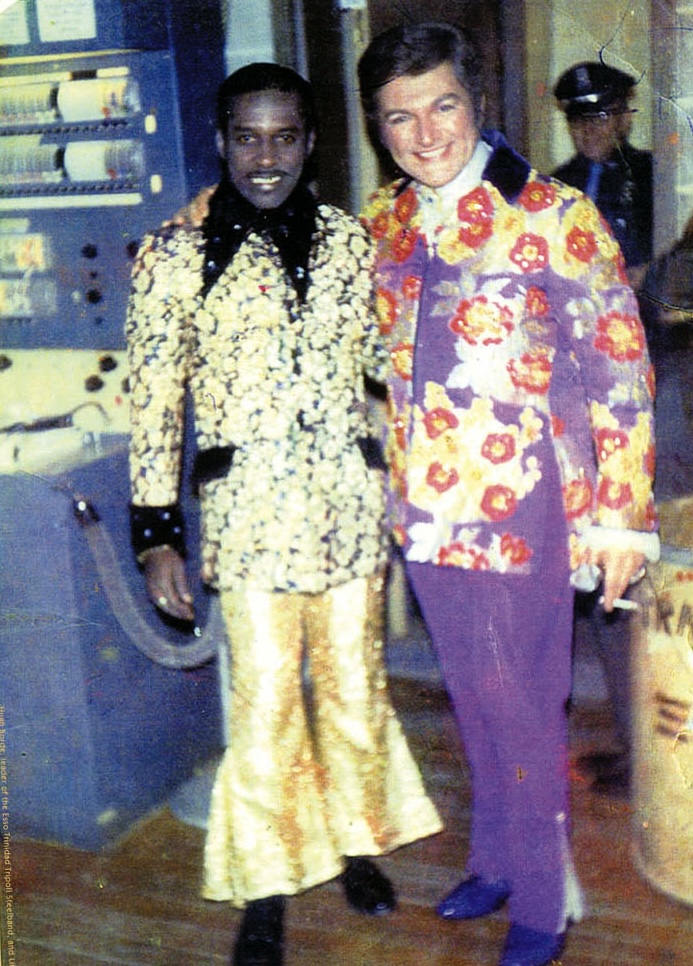
(Photo credit: Kitchen Sisters)
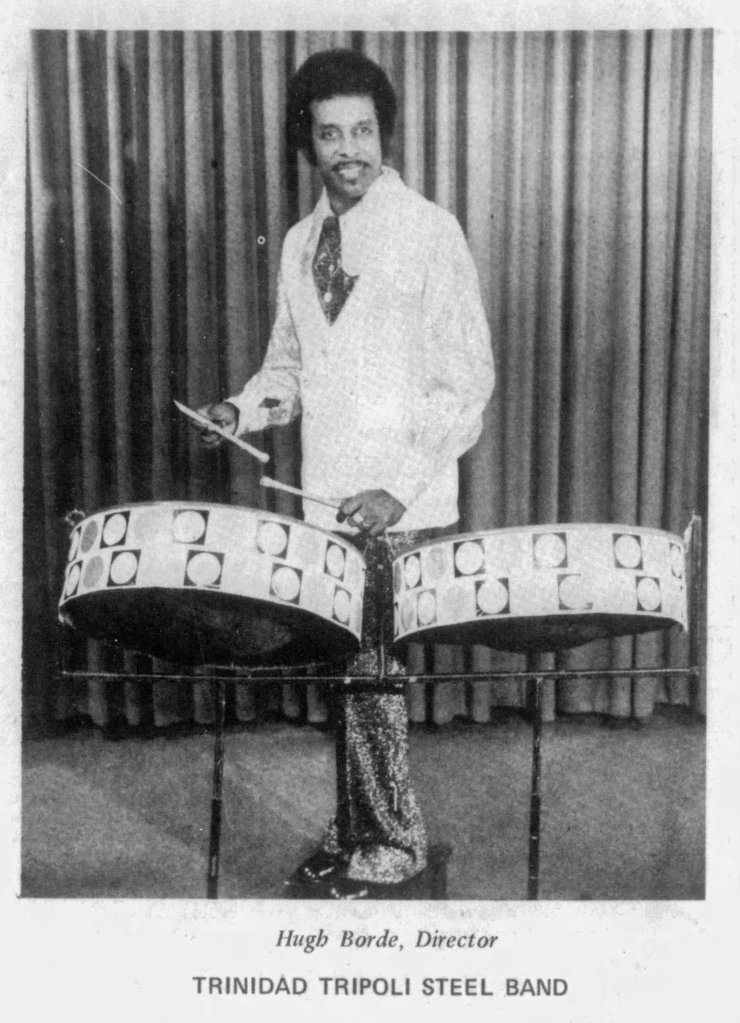
Hugh Borde was born on April 10th, 1933 in the dual-nation of Trinidad and Tobago.1 An early pioneer of steel drum (or pan) music who helped to legitimize the genre worldwide, Borde was responsible for founding Trinidad and Tobago’s first state-sponsored steel drum band, Hell’s Kitchen, in 1947.2 “It was difficult [for me to become a pan musician because] my father owned the first pharmacy, which was the first business place, in Saint James,” Borde told When Steel Talks in 1980. “Me and my elder brother Carl, we were [in college], and taking up pan in those days [was seen as a hooligan activity]. People saw us playing and said, ‘well if the Borde boys can play pan, [why can’t we]?”3
In 1951, Hugh Borde became the band leader and musical director for the Trinidad Tripoli Steel Band, a collective of approximately 40 to 60 pan musicians which took its name from the 1942 film To The Shores of Tripoli.4 Under Borde’s leadership, the Trindad Tripoli Steel Band would perform for visiting dignitaries like Haile Selassie and Queen Elizabeth, before receiving an invitation to represent Trinidad and Tobago at the Montreal World’s Fair Expo in 1967.5
This invitation would put the band in direct contact with Liberace who happened to catch one of their “dazzling” performances while visiting the Fair during his own tour of Canada.6 At the time, steel drum music was largely unknown outside of the Caribbean where it had evolved from a “nuisance” pass-time for the young and the poor to a powerful symbol of resistance to British rule.78 “The [British] navy used a lot of oil,” one steel drum musician explained to NPR in 2005, “[so] thousands of [oil] drums [would] pile up in the back of their warehouse a mile high. When the guards were all gone, we would go down there as young boys and steal the drums away from the navy base and run away with them [to use as instruments].”9
Intrigued by the steel drum’s symphonic sound and Hugh Borde’s natural charisma, Liberace “immediately” invited the Trinidad Tripoli Steel Band to join him for an upcoming tour in Los Angeles. “I thought he was really making a joke y’know?” Hugh Borde laughingly recalled years later. “About a month after, he said, ‘okay come on.’ We had to give up where we were staying in Toronto to get to [Los Angeles] in 3 days. We knew nothing about highway this or highway that […] we were going through all types of mountains and small roads, but we did get there before the show. […] And when we performed, I’ll never forget […] we got a standing ovation. It was unbelievable. The people wouldn’t sit down, they kept clapping. And Liberace came on stage and played with us and he said [to the audience], ‘how would you all like for me to take them on tour with me?’ And everybody [erupted]. That was it.”10
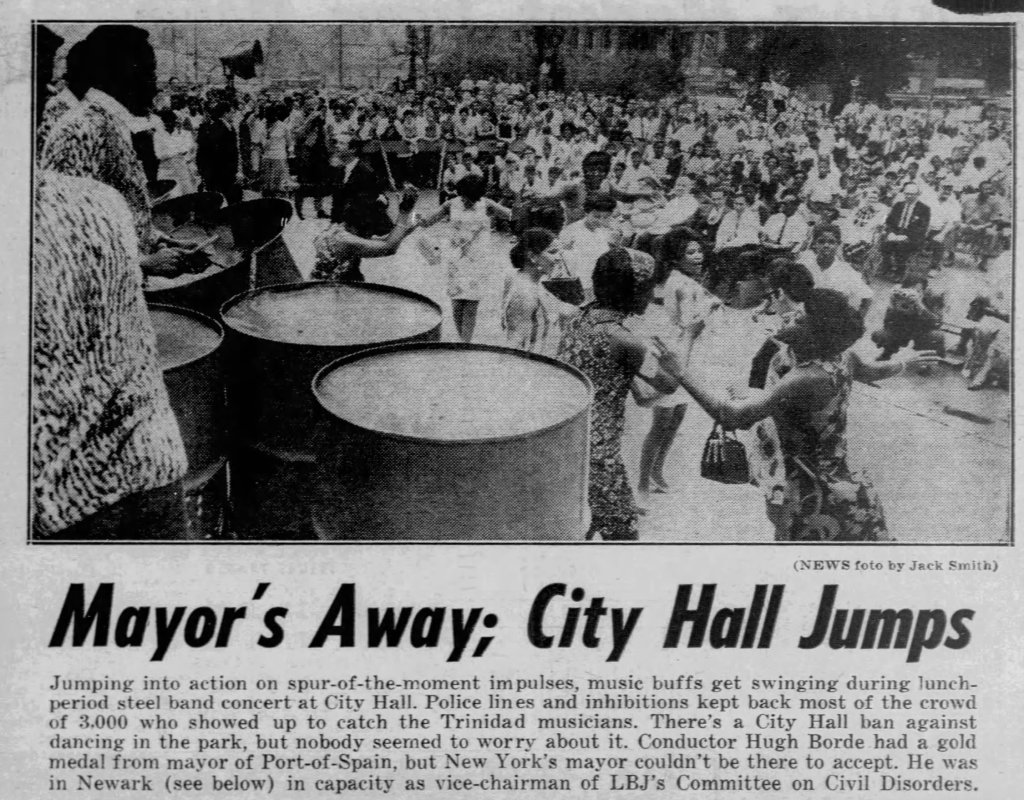
(Photo credit: New York Daily News)
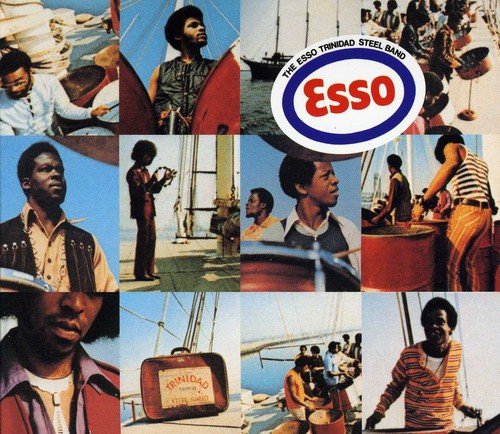
(Photo credit: Pan on the Net)
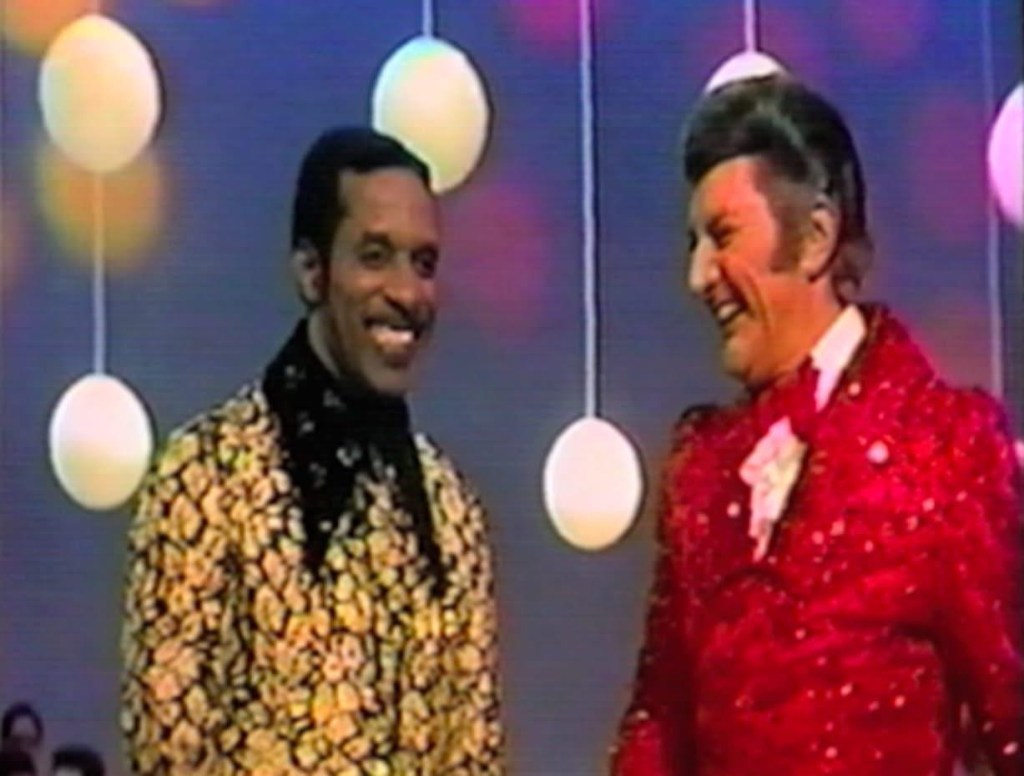
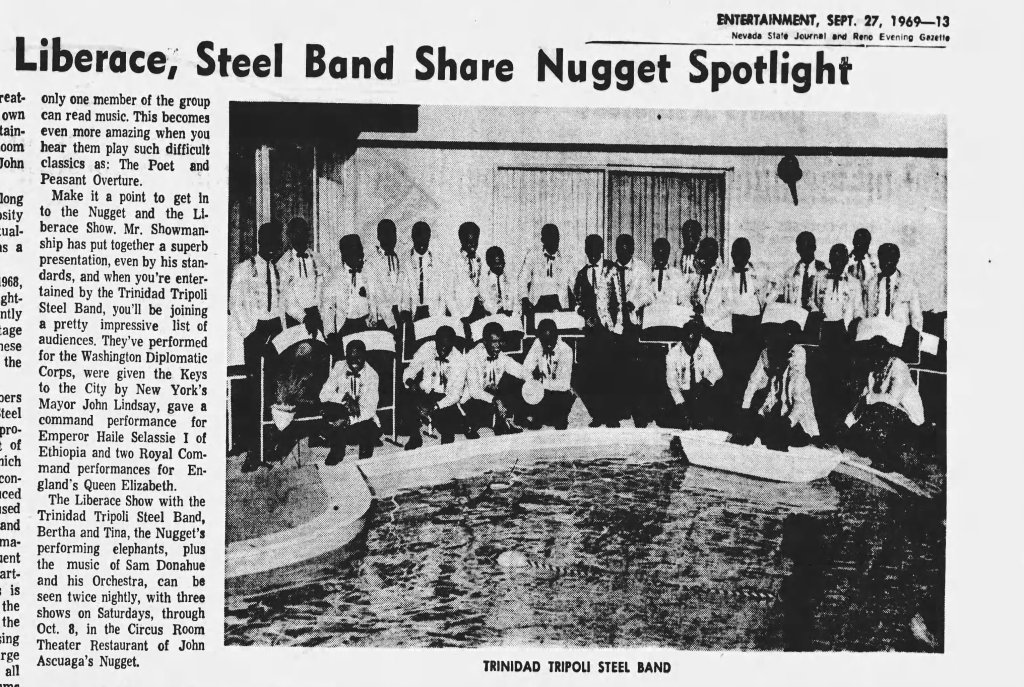
The Trinidad Tripoli Steel Band would go on to tour and perform with Liberace for nearly three years, opening for him at major venues like the Shrine Auditorium and the Golden Nugget, and appearing beside him on popular TV shows like Ed Sullivan and Mike Douglas.11 “The Trinidad Tripoli, under the direction of Hugh Borde, […] is a company of some 20 young men who get sounds from steel drums that are simply unbelievable,” the San Francisco Chronicle raved. “The drums, individually tuned and each with several different notes, are capable of sounding like – if not actually reproducing – the full color of a symphony orchestra. […] It’s a tribute to Liberace’s confidence in himself that he allows the Trinidad Tripoli to go on before he himself is finished. Most acts simply couldn’t follow them.”12
On stage, Liberace and the Trinidad Tripoli Steel Band would perform high-energy numbers like Bent Fabric’s “Alley Cat” together, decked out in colorful, matching costumes that Hugh Borde would draw direct inspiration from for the rest of his career. “Liberace always wore elaborate materials with rhinestones and diamonds and I guess you could say that’s where I got the idea for some of my designs,” he told the Detroit Free Press in 1985. “Some would consider Liberace extreme in his dressing, but I don’t. He was away ahead of his time. His image is to be bright and shining and I like to be that way too. That’s the way a performer should look.”13
Speaking to NPR in 2005, Hugh Borde would also credit Liberace with helping him to introduce steel drum music to middle America at a time when institutional racism was at its peak. “We were touring as 27 black people with the Liberace show all in Birmingham, in the South,” Borde remembered. “In those days, [segregationist] governor [George] Wallace was going up for election and Lee took a chance.”14
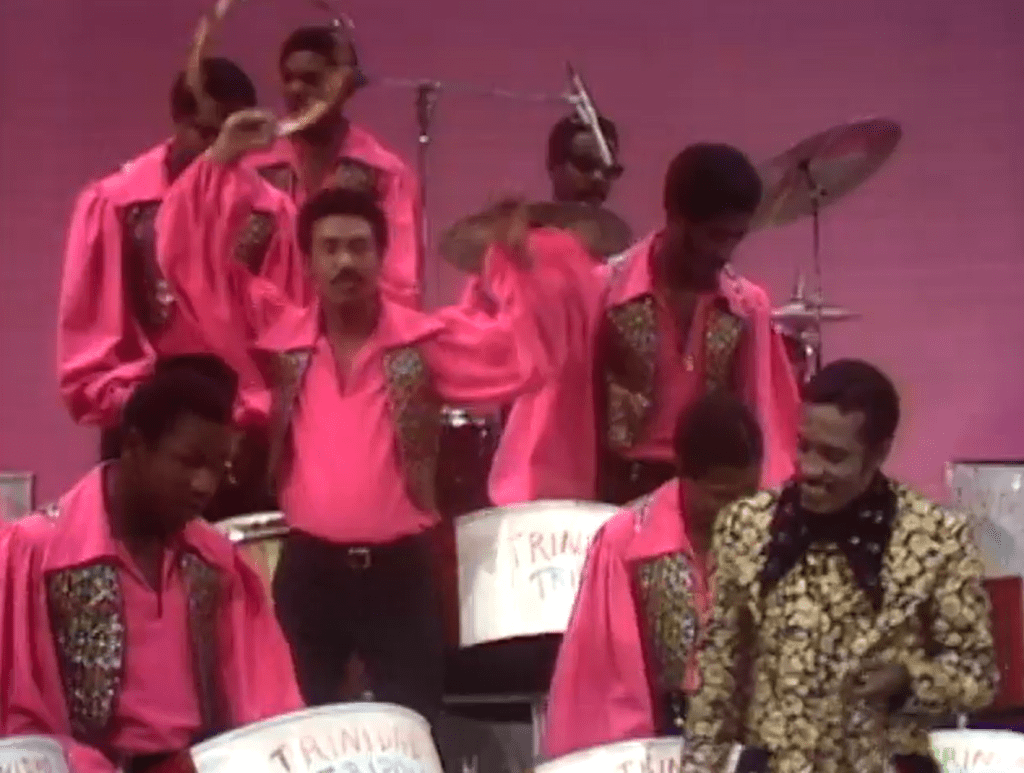
(Photo credit: Youtube/The Ed Sullivan Show)
(Photo credit: Youtube)
(Photo credit: The Nevada State Journal)
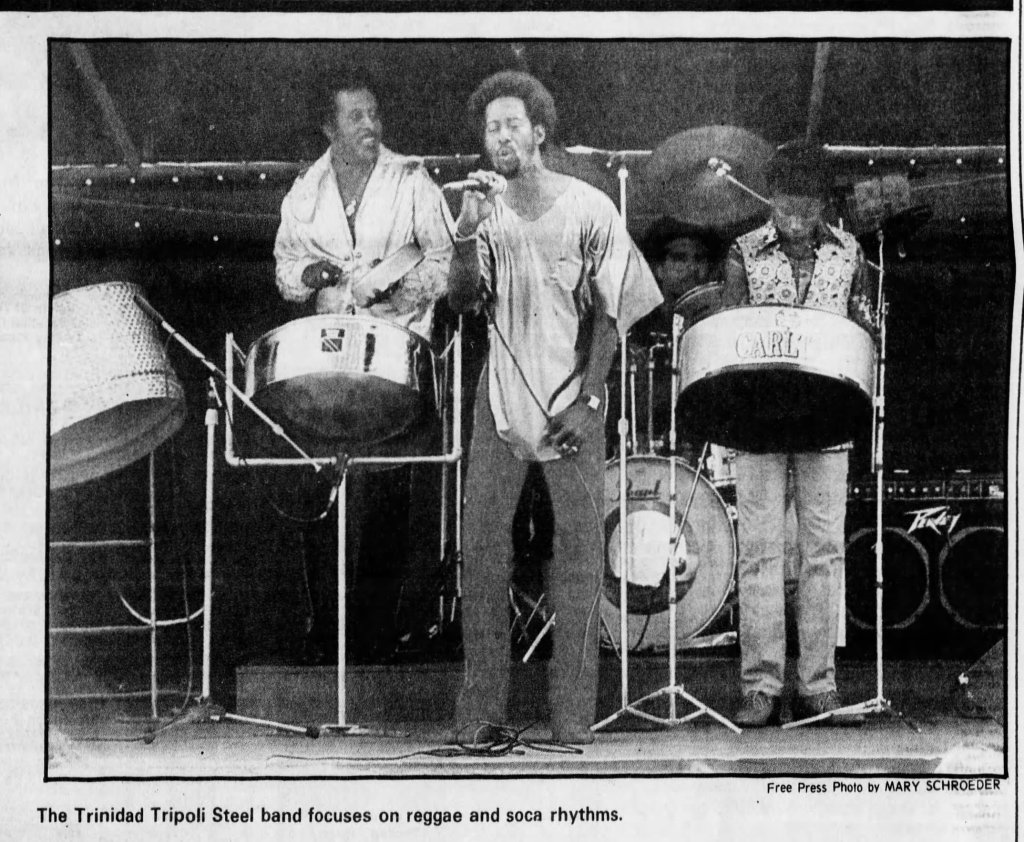
After parting ways with Liberace in 1970, Hugh Borde continued to perform with the Trinidad Tripoli Steel Band at state fairs, colleges, and cultural events across the US.15 A proud Trinidadian whose contributions to steel drum music remain historic to this day, Borde would also serve as a judge in Trinidad’s annual steel drum competition, Panorama, as well as receive a Grammy nomination for his work with the Trinidad Tripoli Steel Band in 1972.16
(Photo credit: The Daily News)
(Photo credit: Detroit Free Press)
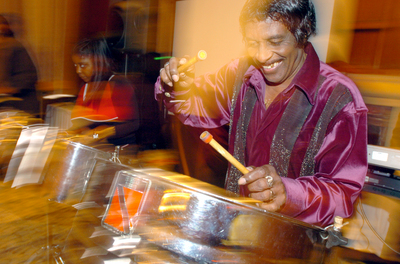
(Photo credit: The Ann Arbor News)
Hugh Borde passed away on February 18th, 2020 at the age of 86.17 His family remembered him as a “loving son, brother, uncle, father, grandfather and great grandfather” who was “extraordinarily dedicated” to his art and the advancement of steel drum music worldwide.18
For more on Hugh Borde’s fascinating career and friendship with Liberace, check out the video below:
- “Hugh Borde Obituary ,” Nie Funeral Homes, 2020, https://www.niefuneralhomes.com/memorials/hugh-borde/4113712/. ↩︎
- Ibid. ↩︎
- Von Martin, Hugh Borde – Pan Pioneer in an Exclusive Interview with Journalist Von Martin – 1980, When Steel Talks (Youtube, 2017), https://www.youtube.com/watch?v=g-VTiaWxkJM. ↩︎
- The Kitchen Sisters and Lost and Found Sounds, “Liberace & the Trinidad Tripoli Steelband,” NPR, March 4, 2003, https://www.npr.org/2003/03/04/1182855/liberace-and-the-trinidad-tripoli-steelband. ↩︎
- “Hugh Borde Obituary.” ↩︎
- Liberace, The David Frost Show (Youtube), https://www.youtube.com/watch?v=8Acwp6vbxTU. ↩︎
- “Liberace & the Trinidad Tripoli Steelband.” ↩︎
- Ibid. ↩︎
- The Pan Story (Youtube, 2016), https://www.youtube.com/watch?v=bHDkncueEdY. ↩︎
- Ibid. ↩︎
- “Liberace & the Trinidad Tripoli Steelband.” ↩︎
- John L. Wasserman, “Impossible Dream: The Return of Liberace,” San Francisco Chronicle, April 3, 1970. ↩︎
- Carol Teegardin, “Musician Works on Flashy Image,” Detroit Free Press, September 19, 1985. ↩︎
- “Liberace & the Trinidad Tripoli Steelband.” ↩︎
- “Hugh Borde Obituary.” ↩︎
- Ibid. ↩︎
- Ibid. ↩︎
- Ibid. ↩︎

 Beyond The Candelabra