
Last week, the legendary Sid Krofft passed away at the age of 96.
Sid and his brother Marty (1937-2023) were two of Hollywood’s most innovative puppeteers and TV producers who were perhaps best known for creating the beloved children’s character H.R. Pufnstuf in 1969.
Liberace considered the Krofft brothers “good friends” and first worked with them in 1962 when he lent both his voice and his likeness to their “adults only” puppet show Les Poupées de Paris (The Dolls of Paris).12
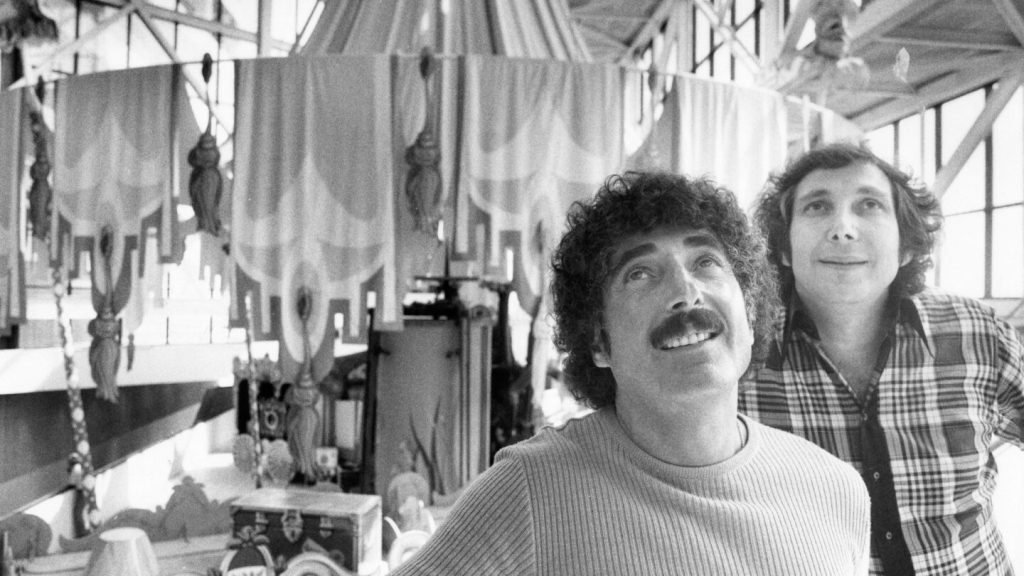
(Photo credit: Atlanta History Center)
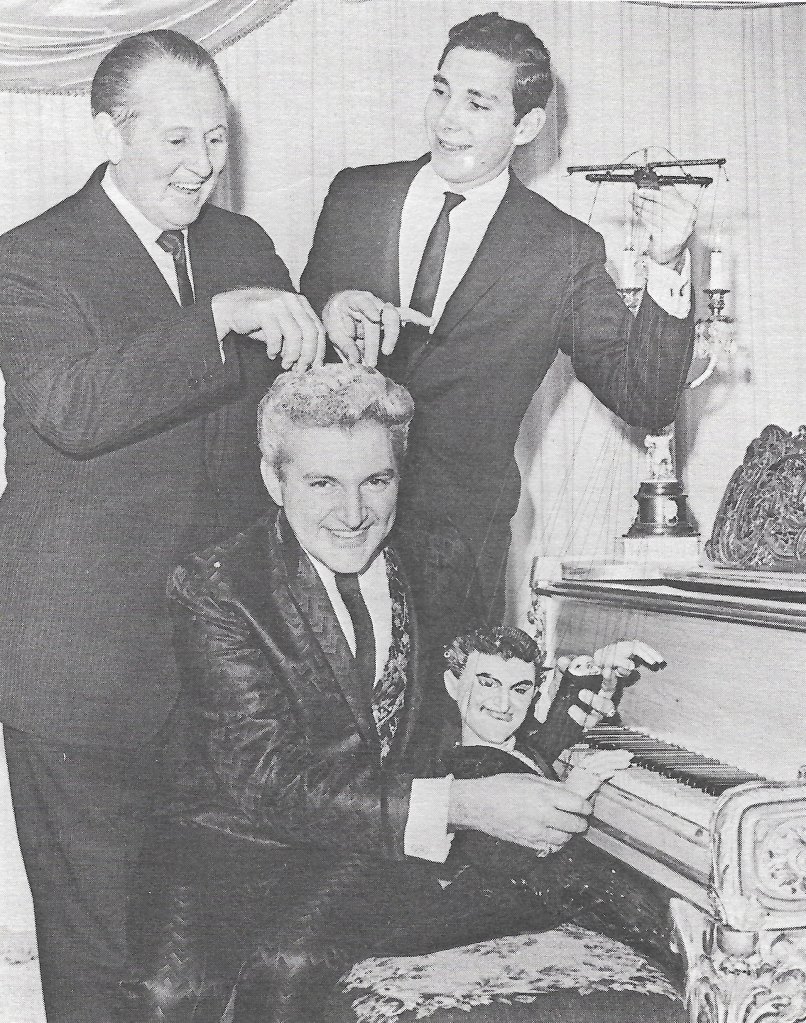
(Photo credit: Liberace show program/scan from author’s collection)
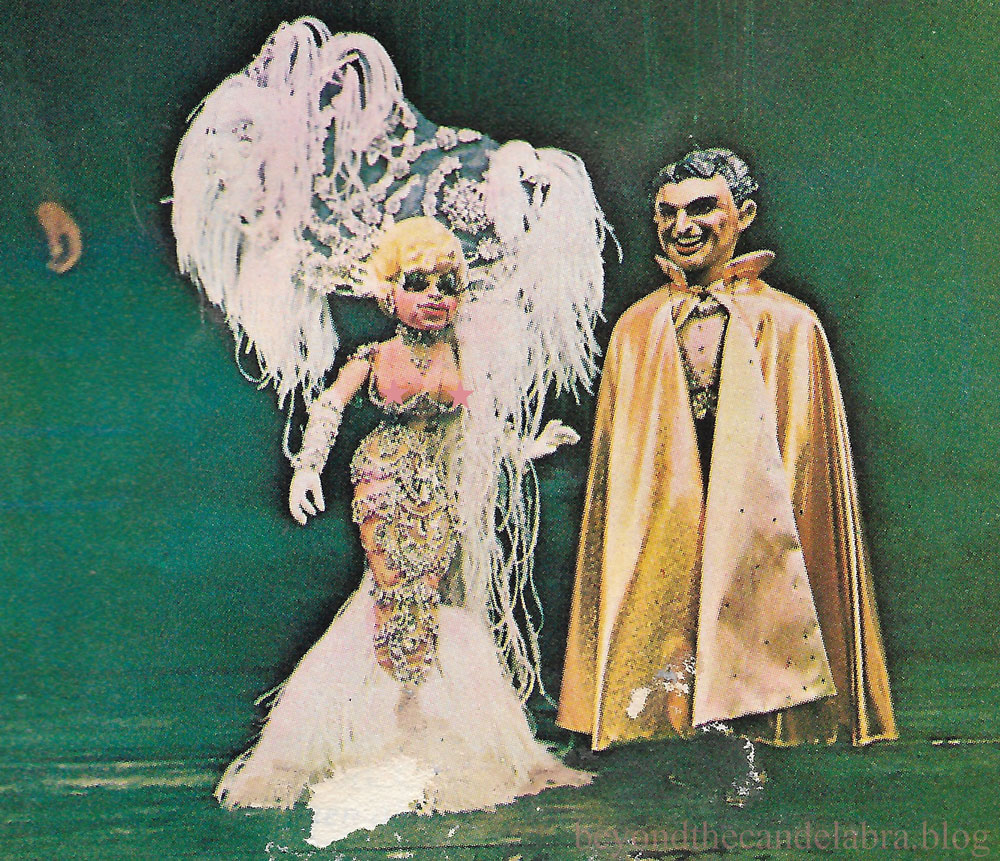
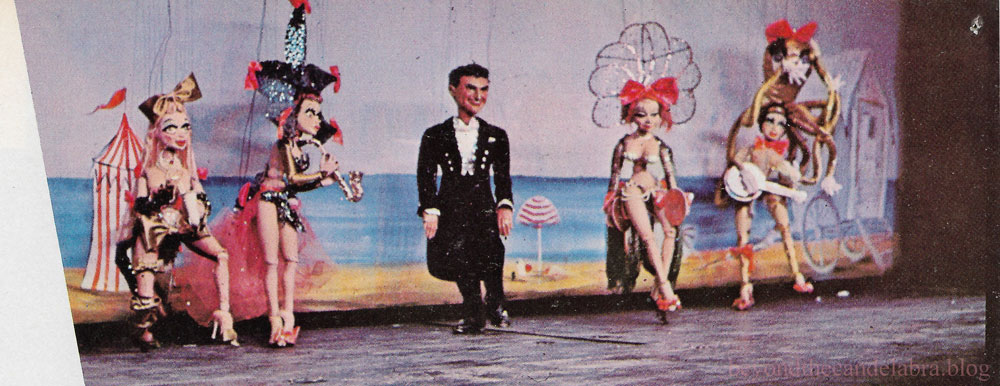
Designed as a “slightly risqué” tribute to Parisian nightlife, Les Poupées de Paris was a musical puppet “spectacular” which featured real-life celebrities, topless showgirls, and classic movie monsters singing and dancing in marionette form.34 Interviewed about the show’s origins in the early 2000s, Sid Krofft recalled that he was inspired to create Les Poupées de Paris after spending years living and working in Las Vegas. “During that same period I began dreaming of re-opening my father’s puppet theater and incorporating much of the [Vegas] glitz and glamour, combined with the adult themes from the Lido shows in Paris.”5
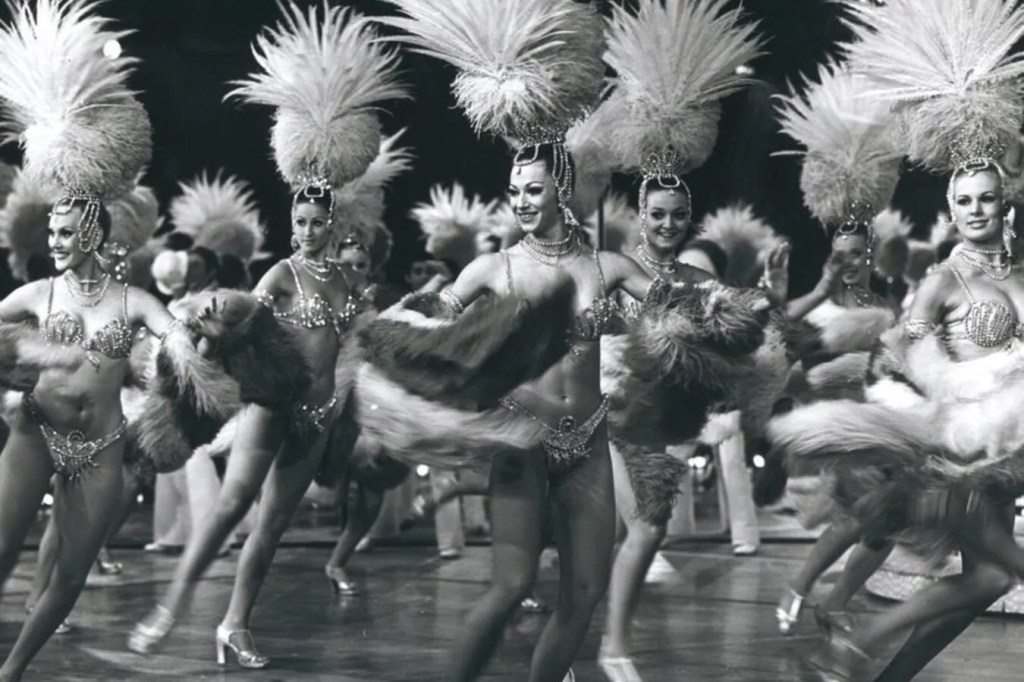
(Photo credit: Come to Paris)
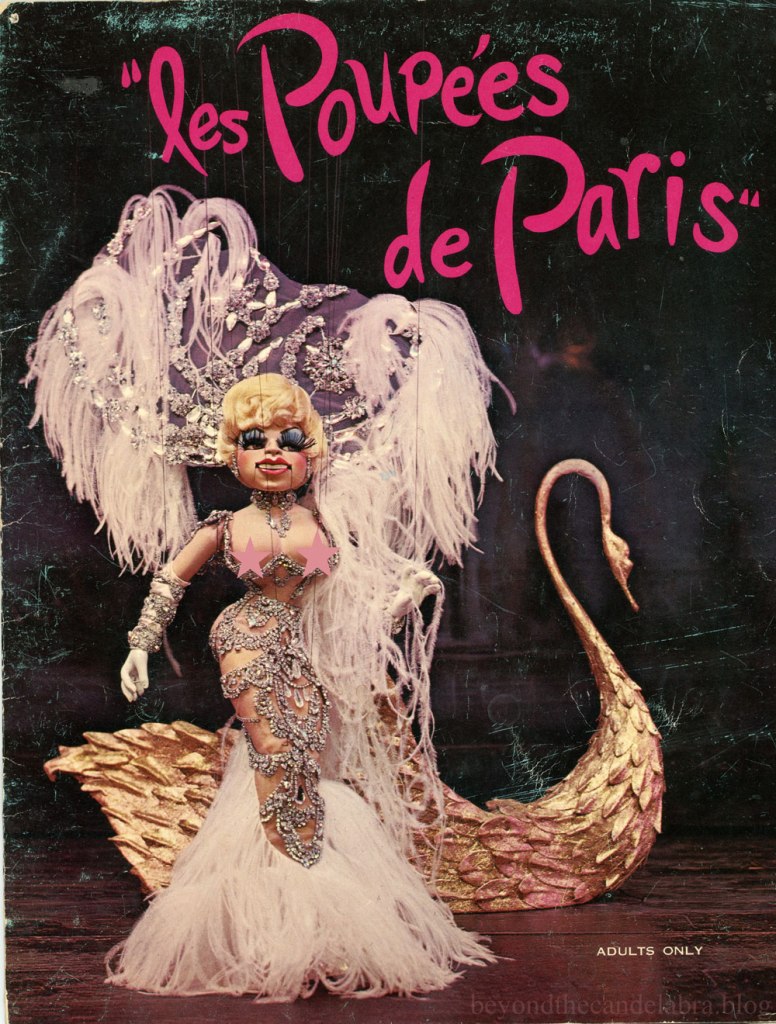
(Photo credit: show program/author’s collection)
Les Poupées de Paris originally debuted at Van Nuys’ Gilded Rafters Restaurant in the fall of 1961, but was later reworked for a renewed premiere at the Kroft brothers’ Hollywood theatre on May 23rd, 1962.67 In the 1962 version, “Liberace” appeared on-stage “following his triumphal engagement at La Scala [theatre] in Milan” to perform a musical number with the Poupées showgirls dressed as sirens. Liberace then re-appeared in the show’s grande finale to hold court with Mae West at the palace of Versailles.8
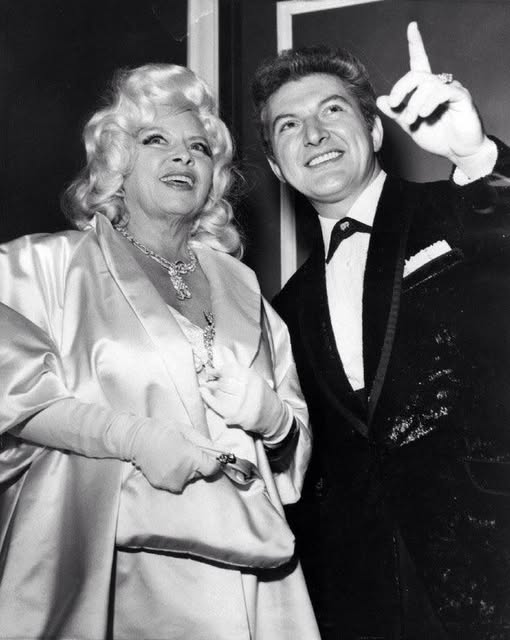
To help increase publicity for Les Poupées’ re-opening in Hollywood, the Krofft brothers asked Liberace if he’d be open to attending the premiere with Mae West as his “date.” A mega fan of West’s since childhood who patterned much of his own on-stage persona after hers, Liberace eagerly agreed to the request and later recounted it at length in his autobiography:
“Sid and Marty suggested that since [Mae and I] knew each other anyway and were both represented by puppets in the show, it would be a good idea if we attended the opening night together. We were agreeable, so it was arranged for me to escort Mae West to the opening. It got a lot of newspaper space because it seemed to gossip writers and newsmen a rather strange coupling.
[…] Of course, when we got to the theatre […] there were hordes of photographers, movie and TV cameras to fulfill the whole purpose of the opening, which was to spread the news to everybody that there was an amusing and different type of show in town. Well, when we stepped out of the Cadillac, both dressed as beautifully as we knew how, cameras started grinding and flash bulbs started popping and people started clapping and it was very exciting.
Before we arrived at the theatre, [Mae] had asked me to stay very close to her and help her with any steps or stairway that we might encounter. She explained that in a situation like this one she didn’t like to look down while walking. So I was to whisper sweet nothings to her as we walked, things like, ‘there’s a step coming. Be careful.’ Or, ‘we’re coming to a little incline in a moment.’ It was very effective, and she looked simply out of this world in a long white satin dress with a short train. The dress, her furs, her hair formed an ensemble that was the final destination of glamor.
[…] Naturally, we both loved the show, having recorded every word the puppets said. Seeing ourselves represented and being able to judge from a third-person vantage point how the public was accepting us was a new and interesting experience.”9
Les Poupées de Paris was a smash hit with critics who lauded the show’s intricate costumes, campy humor, and dynamic puppetry.10 “The greatest (puppet) show on earth [is] Les Poupées de Paris,” The Van Nuys News‘ declared. “Sid and Marty Krofft who produce and direct the show, deserve a great deal of credit for the superb craftsmanship displayed in this production.”11
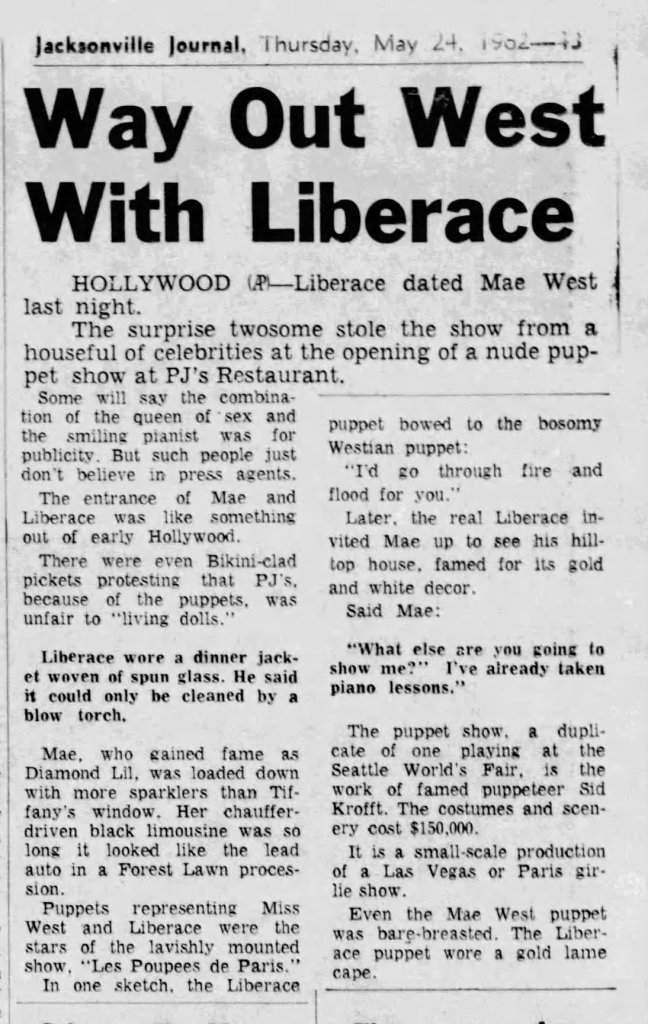
Another critic from the Associated Press believed that Mae West and Liberace had “stole[n] the show” entirely, writing in his review that the pair’s on-stage banter, coupled with their “surprise” appearance at the Poupées premiere in May, felt like something straight “out of early Hollywood.”12 “In one sketch, the Liberace puppet bow[s] to the bosomy Westian puppet [and says] ‘I’d go through fire and flood for you.’ Later, the real Liberace invited Mae up to see his hilltop house, famed for its gold and white decor. Said Mae: ‘what else are you going to show me? I’ve already taken piano lessons.”13
(Photo credit: Facebook)
(Photo credit: show program/author’s collection)
(Photo credit: show program/author’s collection)
(Photo credit: The Jacksonville Journal/Associated Press)
Following Les Poupées’ strong critical reception in Los Angeles, the show would find wider audience acclaim at the Seattle, New York, and San Antonio World’s Fairs where it was seen by an estimated 9 million people between 1962 and 1968.14 At its peak, Les Poupées de Paris featured 250 different puppets, 24 puppeteers, and the additional voices of Jayne Mansfield, Milton Berle, Pearl Bailey, and Gene Kelly.1516
In 1964, a cast album was recorded for the production which featured Liberace and Jayne Mansfield performing the original song “It’s a Living” alongside “Pelvis Essley” (Elvis impersonator Lance LeGault).17 The album was nominated for a Best Novelty Effects Grammy, but lost to The Chipmunks Sing the Beatles Hits (which is exactly as grating as you can imagine).18
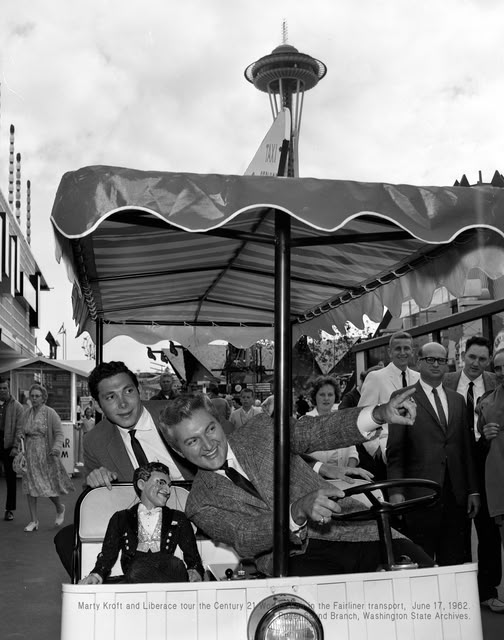
(Photo credit: Washington State Archives)
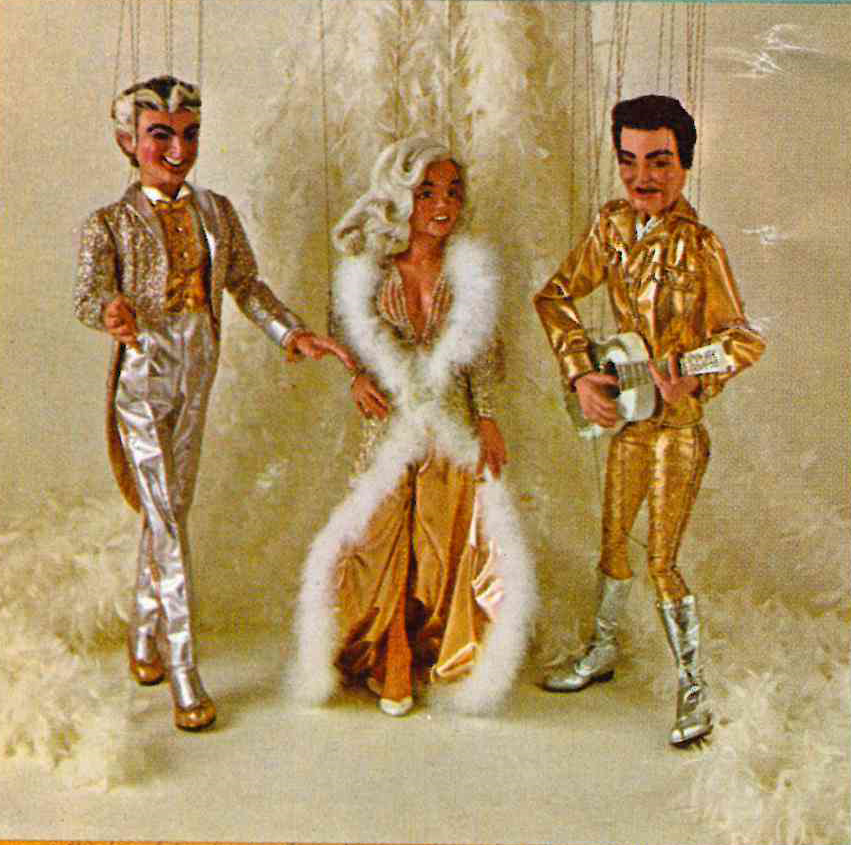
(Photo credit: Manuscript Collections)
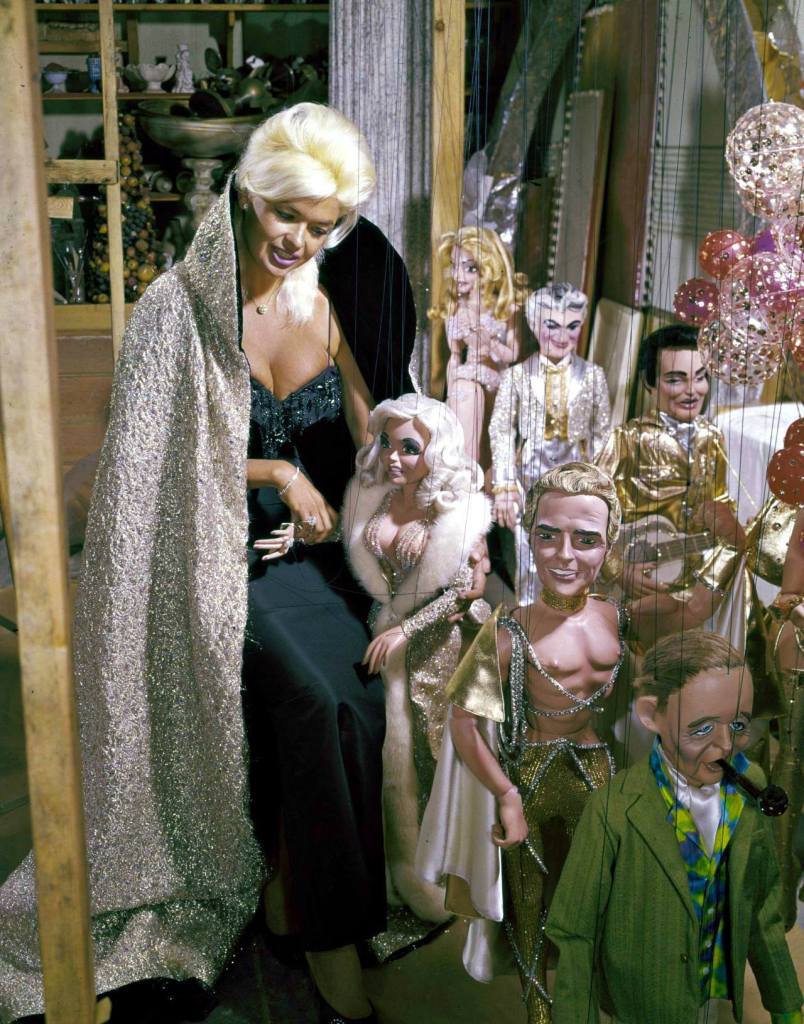
(Photo credit: Vintage Los Angeles)
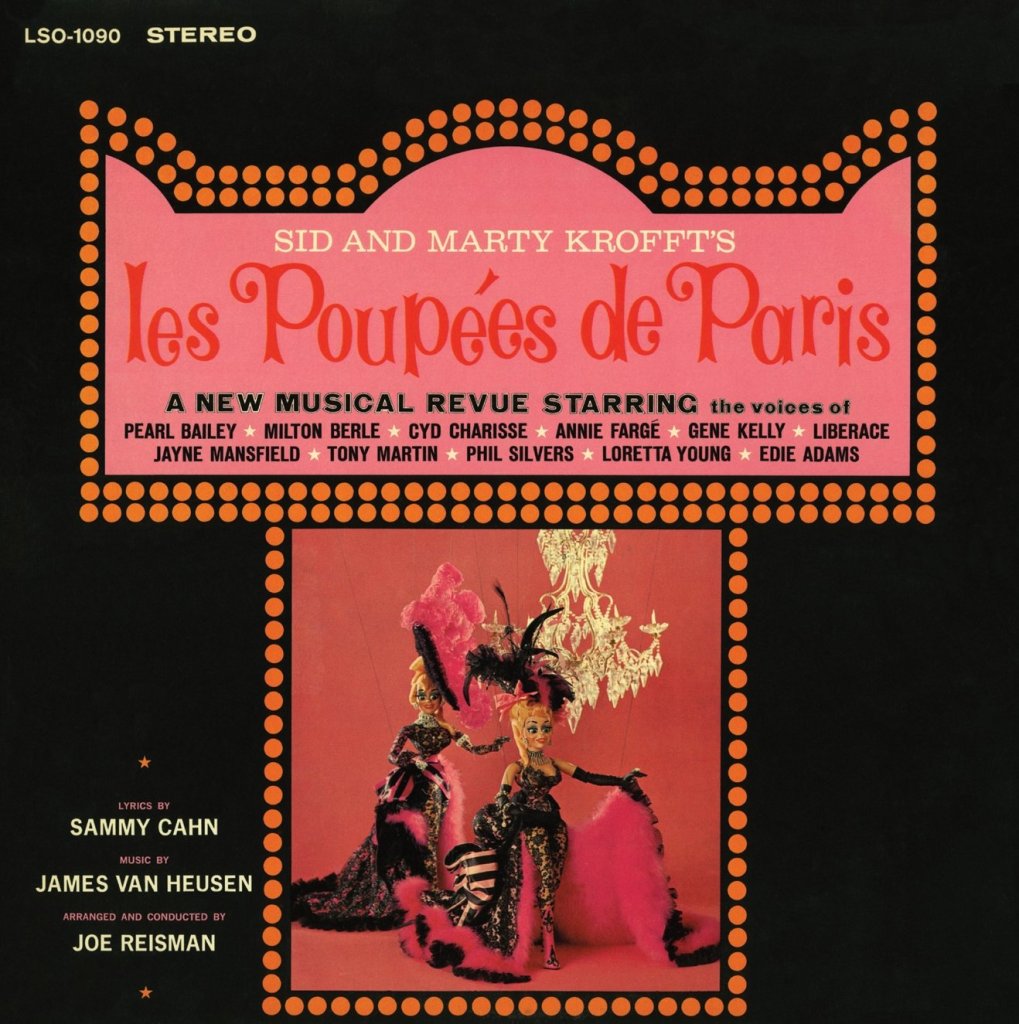
(Photo credit: Discogs)
You can check out “It’s a Living” on my Youtube channel as well as full scans from the 1962 Poupées program on my Dropbox.
Rest in peace Sid and Marty Krofft!
- Liberace, Liberace: An Autobiography (Don Mills, Ontario: Longman Canada Limited, 1973), 149. ↩︎
- Les Poupées de Paris, program (1962). ↩︎
- “History,” The World of Sid and Marty Krofft, accessed April 18, 2026, https://www.sidandmartykrofft.com/about/history. ↩︎
- Poupées program. ↩︎
- “Les Poupées de Paris,” The World of Sid and Marty Krofft, accessed April 18, 2026, https://www.sidandmartykrofft.com/show/les-poupees-de-paris/. ↩︎
- “‘Les Poupees de Paris’ Attracting Full Houses,” The Van Nuys News and Valley Green Sheet, December 1, 1961. ↩︎
- Poupées program. ↩︎
- Ibid. ↩︎
- Liberace, 148-150. ↩︎
- John L. Scott, “The Krofft ‘Poupees’: They’ve Got the World on a String,” The Los Angeles Times, June 2, 1965. ↩︎
- Ali Sar, “Kroffts Capture Paris Color in Puppet Spectacular ‘Poupees,’” The Van Nuys News, May 27, 1962. ↩︎
- Associated Press, “Way Out West with Liberace,” Jacksonville Journal, May 24, 1962. ↩︎
- Ibid. ↩︎
- “Les Poupées de Paris,” The World of Sid and Marty Krofft. ↩︎
- Ibid. ↩︎
- Sid and Marty Krofft’s Les Poupées de Paris, vinyl recording (New York City, New York: Sid and Marty Krofft, 1964). ↩︎
- Ibid. ↩︎
- “Grammy Award for Best Engineered Recording – Special or Novel Effects,” Wikipedia, April 18, 2026, https://en.wikipedia.org/wiki/Grammy_Award_for_Best_Engineered_Recording_%E2%80%93_Special_or_Novel_Effects. ↩︎

 Beyond The Candelabra